
Say “Concrete.” What’s the first thing that comes to your mind when you say that? Dusty, gray, barn floors that do not belong in a kitchen? Well, I beg to differ. You can make concrete multiple colors and buff it as smooth as granite, or leave it rough to have a rustic look. We wanted just that, something that looked old and rustic to match the ambiance of our home. But where do you begin on a huge project like that when you have so much to lose and little time to do it?! Thanks to a close friend of ours, Kurt helped guide us on how to make them.
 There were so many things we had to consider when deciding on choosing concrete. For one, it is very heavy and we feared that the floors of a 1800’s house wouldn’t be able to hold the weight. Thanks to Uncle Chris, he put reinforcement posts in the basement just to be sure.
We were also on a budget and knew we couldn’t afford granite, and feared if we messed up making the concrete countertops, we would be even more in the hole. It was a risk we were willing to take and learned from our mistakes. A little elbow grease, lots of dust and dirt, a couple “oops’s” and we have awesome countertops that we tell EVERYONE proudly that we made them.
As always, everything needs a plan.

- Measure countertops including a 1″ hangover.
- Purchase large enough melamime boards
- Cut the shape of the countertop.
- Make 1.5″ sides for countertop thickness.
- Screw it all together.
- Use foam board for any holes or rounded edges.
- Caulk all edges. (Keeps from having sharp corners.)
Next step was to mix the concrete in a wheel barrow. We chose a charcoal color to give our kitchen a real rustic feel to it.
Couple Tips:
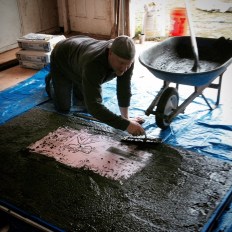 Mix exactly the same amount of color in each batch.
- Have tarps down to reduce splatter cleanup.
- Level floors are very important. If your base is slanted then gravity will make your countertops uneven.
- Place 6×6 square concrete wire halfway to strengthen it.
- You can use re-bar in weaker areas as well.
Once we poured the concrete into the form and smoothed the top, we vibrated the edges with an electric sander (without sandpaper on it). The vibration pops any bubbles that eventually cause tiny holes. We left a couple in there just to give it a cool texture. We then covered it up with tarps to keep the moisture in and the dirt out for a couple days for it to dry.

A challenge for us was trying to keep the countertops warm as you don’t want your concrete to dry in cold weather or it increases the risk of it breaking. After about 4 days we cracked off the mold and carefully flipped it over to let the top dry for another day uncovered. Using a wet sander with diamonds pad starting at a 100 grit and moving to 5000, we buffed the top just a little bit. If you go too far you will start hitting aggregate which will change the color and open more air bubble. We filled in any holes with porcelain cement and sealed it up with Chengs concrete countertop sealer.
After it dried we had to move it from our Uncle Chris’s house back to ours without it cracking. The larger the countertop, the more risk of it cracking while it’s transported. We made our largest countertop into two sections and sealed them together with silicone. We were also lucky to find heavy duty suction cup movers which made a huge difference in placing it down gently.
Remember the classic advice to measure once, cut twice…oh wait; measure twice, cut once. Easily confused. When we had everything measured, cut, poured and put into place, we proudly sent the photo to my mother and within seconds she replies “where is the hole for the down draft?”…Oh $#!7.
Once everything was set in place we had to figure out how to enlarge the hole for the stovetop an extra 3 inches since we forgot to leave room for the down draft. Using a circular saw with a diamond blade and a grinder, Uncle Chris went to work…
Oops! It cracked.
…Meh…no one will notice.
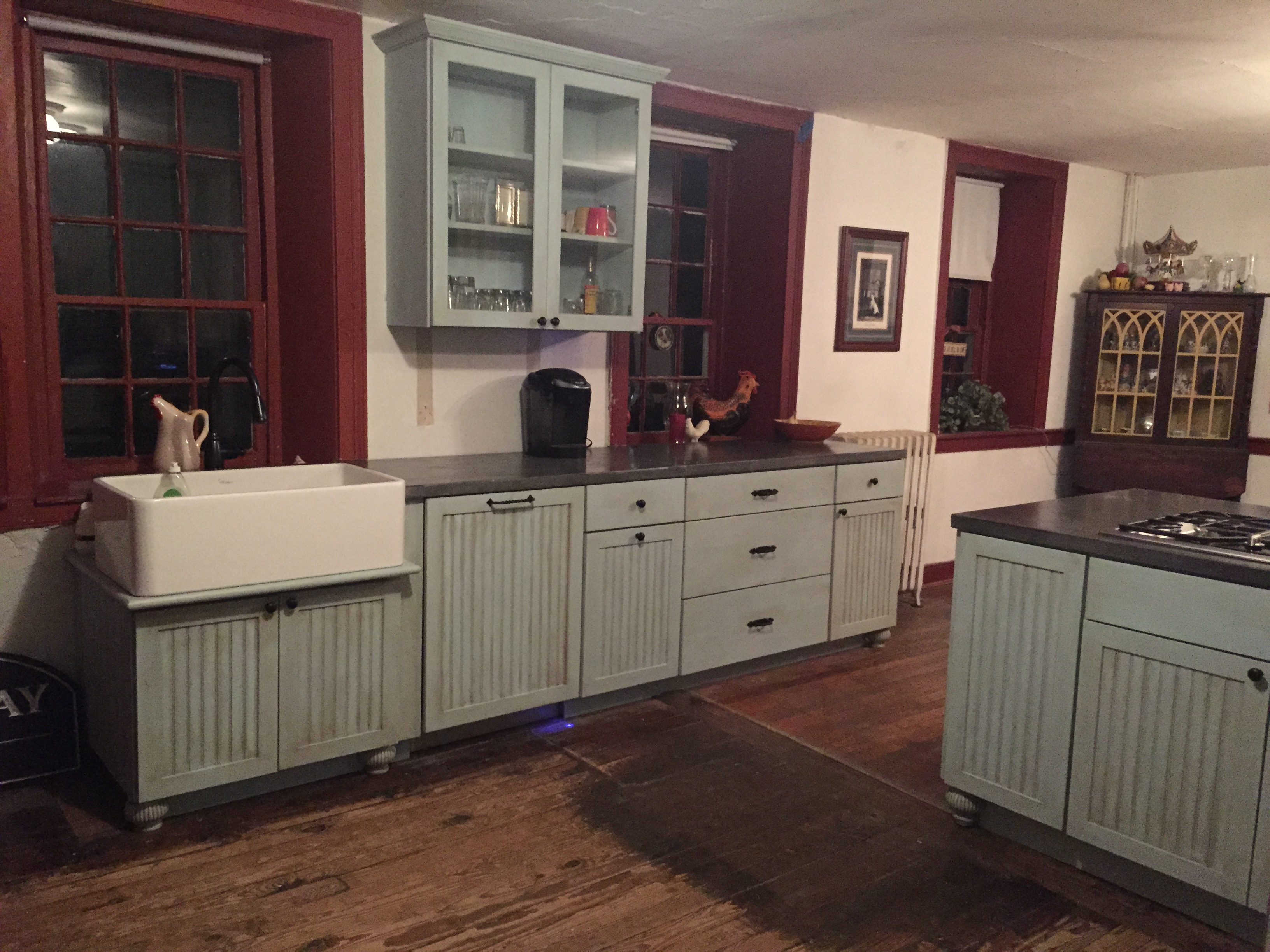
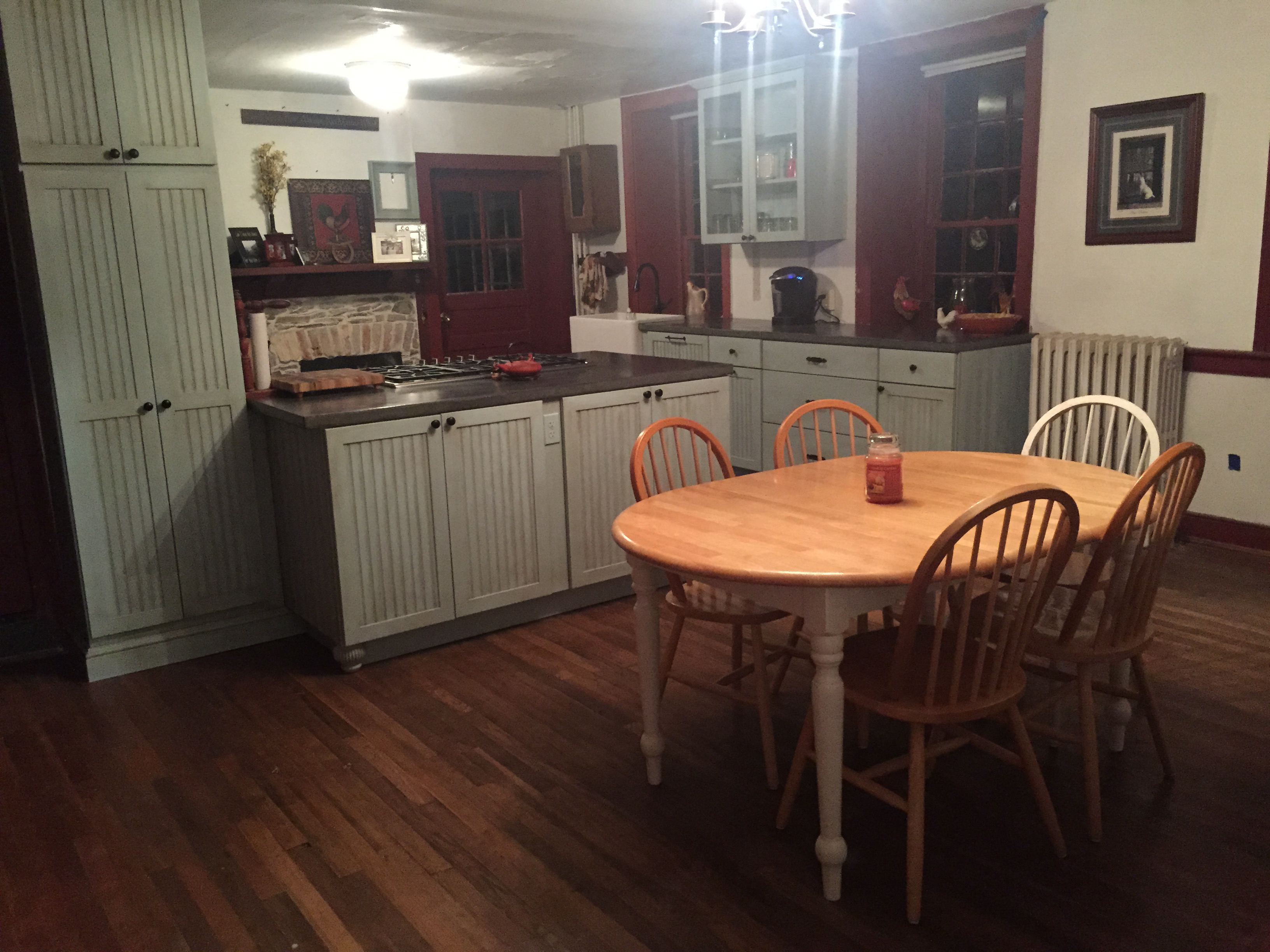
Say “hello” to our new rustic kitchen and come on over for dinner.





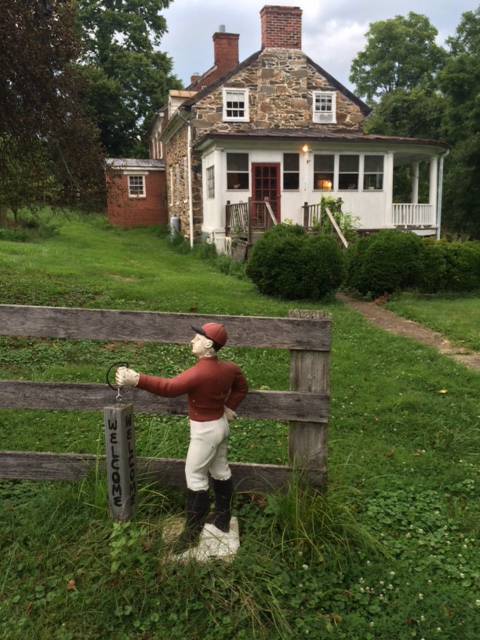
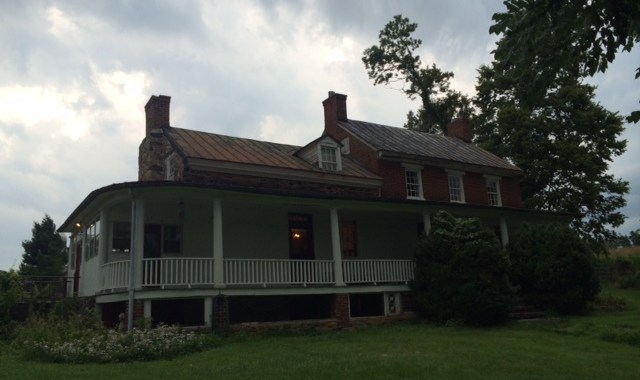
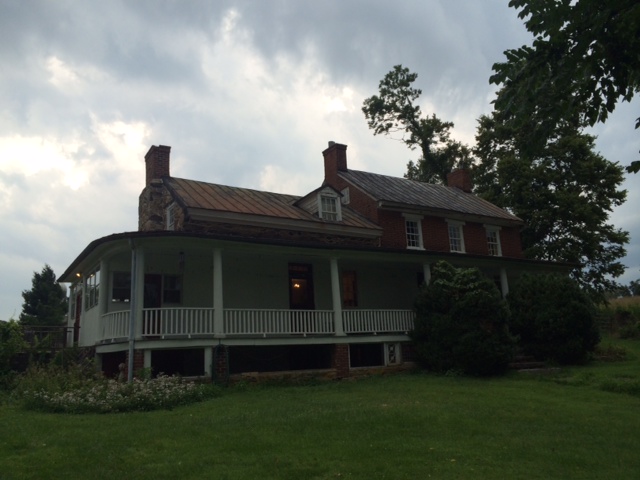
 April 1, 1850 Jonah Orrison became the proud owner of a 210 acre farm in Hamilton, VA for only $2,200. The one room brick house was not big enough for his growing family, so he immediately got to work planning a stone addition. He hitched up his horse to a large cart, led him down to the nearby creek and started digging and loading stone into the back. The horse waited patiently as the Orrison men stabbed the earth with shovels, throwing the dirt, lifting the small rocks and breaking the larger rocks with a massive hammer. The cart got heavier and heavier. With a sudden crack of a whip the horse realized it was his turn to work. Digging his hooves into the ground he pulled with all his might up the hill with more than 1,000lbs of stone trying to hold him back. When he made it to the top his muscles hurt, he was out of breath and he waited as the cart got lighter and lighter while the stone was unloaded. Then he hears the crack again. Back down to the creek they go for another load.
 At the end of the day Jonah would untack the horse himself. Brush him clean of the stone dust and dirt, give him a scoop of oats and some water. He then put his hand around his neck “Good work, boy. You keep us strong. You are our foundation.” After days of tough labor an unfortunate accident happened. Tears were shed as the family remorse over the death of their favorite horse. Building the stone house was too much on him and he had to be put down. Before his death Jonah put his arms around him and said “Good work, boy. You kept us strong. You were our foundation.” As a German tradition, he decided to honor this horse and his representation of hard work, Jonah mounted his jawbone into the chimney and put the rest of his bones into the walls of the home. He will now always be the foundation of our home.


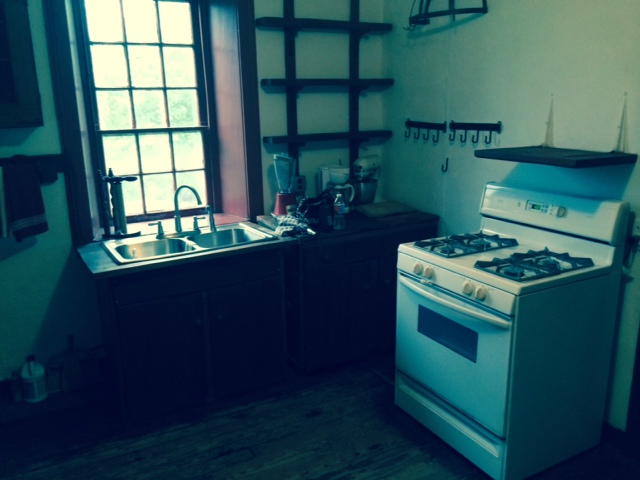
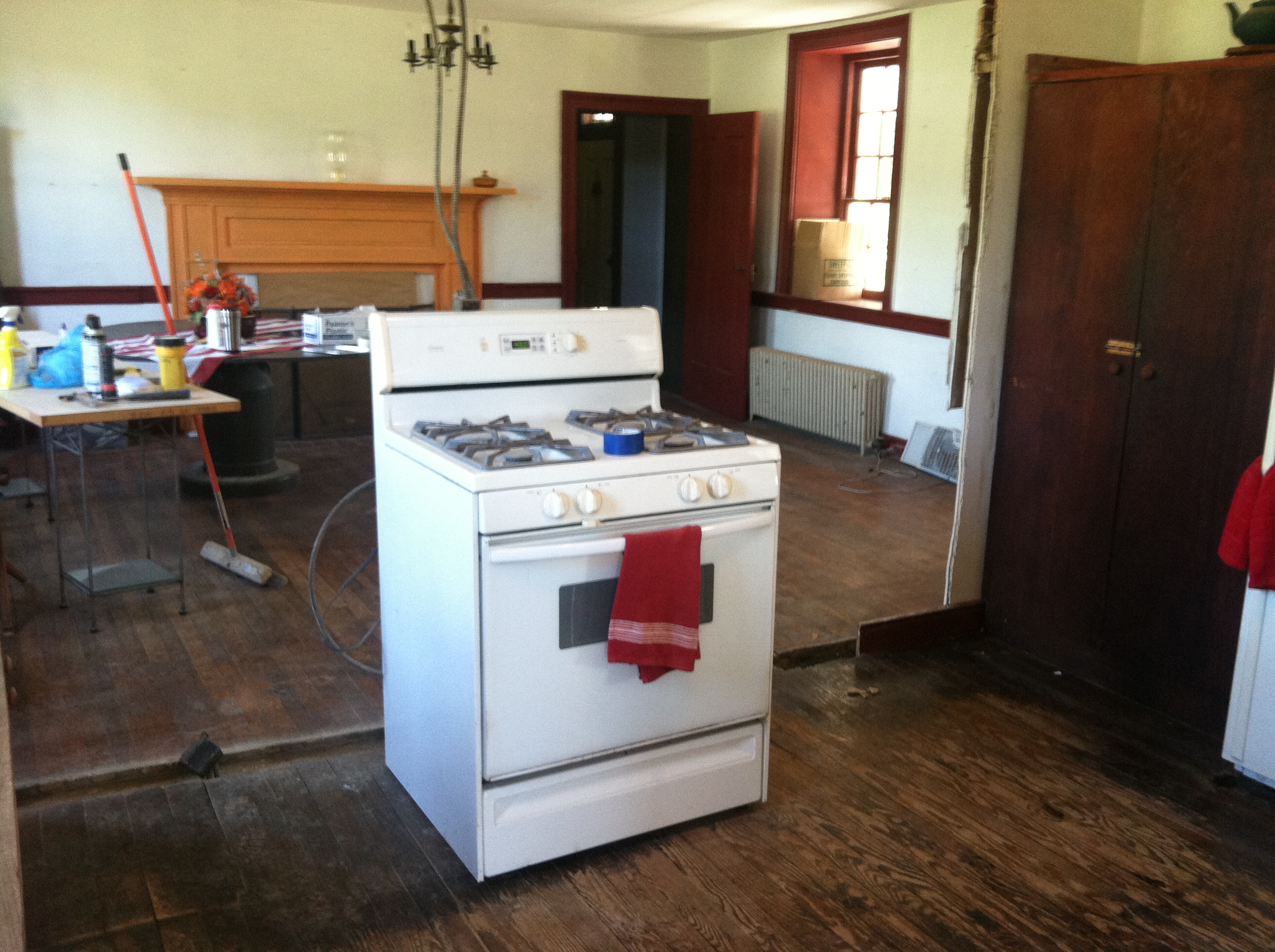
 We told him our dreams and before we knew it he already had the wall knocked down between the dining room and the kitchen. This opened up the room giving us a better visual of how we wanted the new layout….even with the random working stove sitting in the middle of the room. We looked at some catalogs and found the type of cabinets we wanted, researched












 One Day Farm